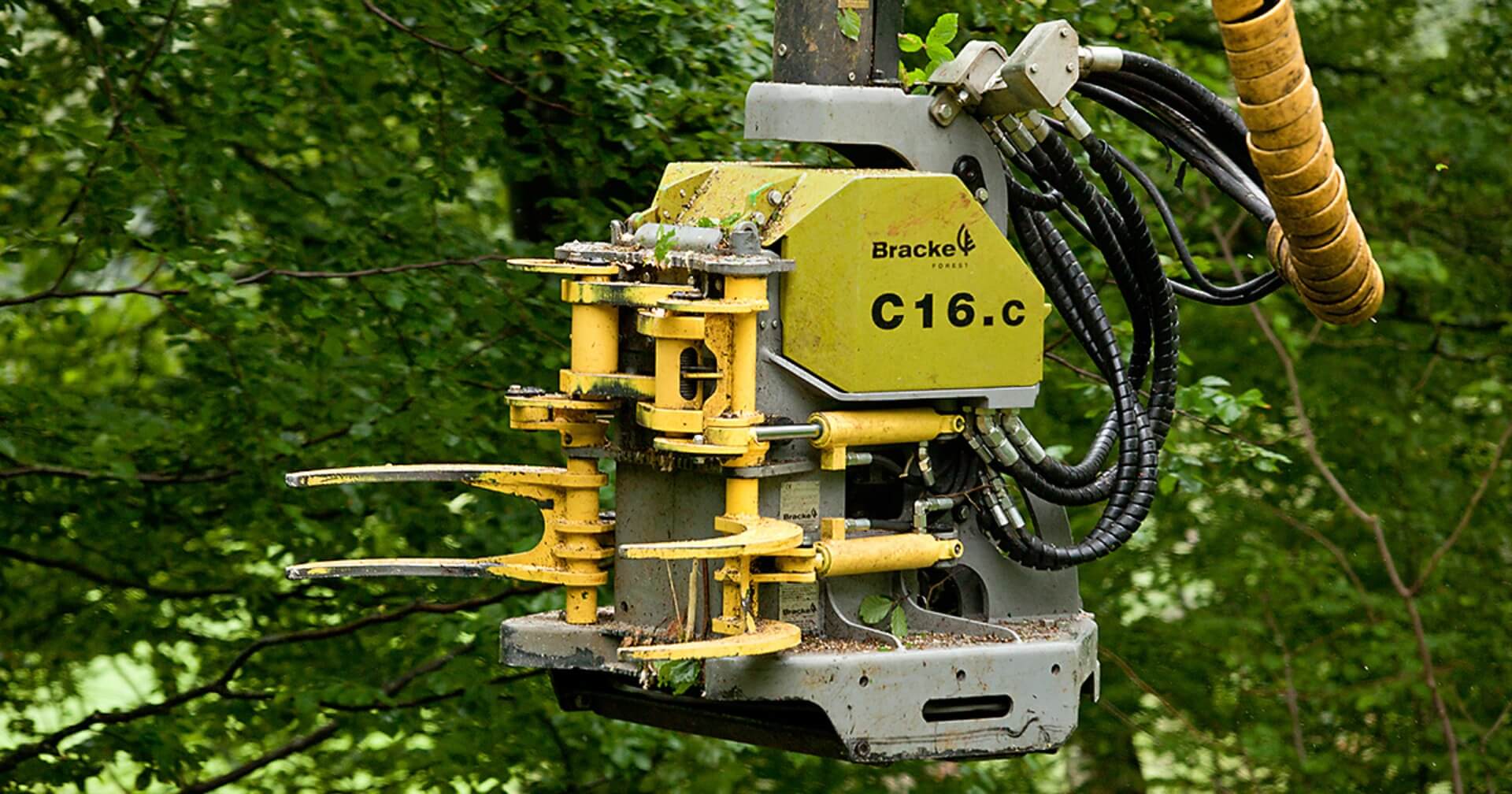
Coppicing is one of the most important forest management activities for ensuring a high quality and stable stand.
During coppicing, competing, damaged or undesirable species are removed from the stand to leave the strongest and most promising trees to grow. This improves the growing conditions of the trees, increases the quality of future wood and reduces the risk of trees becoming unstable to wind or snow loads.
Young trees are increasingly mechanically with specialised working heads, e.g., Bracke a type of head mounted on harvesters, excavators or other logging machines. Such a head can cut and stack several small-diameter trees at the same time, which speeds up the work considerably and makes the management more cost-effective. Bracke heads use a rotating sawing mechanism with a high working capacity, which allows efficient clearing of coppice, overgrowth or scrub and, if necessary, also the preparation of energy wood (wood chips).
This technology is particularly suitable for dense stands of young trees and overgrown areas, where there is a need to reduce the number of trees quickly and efficiently, while maintaining a uniform and viable stand structure. Mechanical management allows larger areas to be managed in less time and with less physical effort, while ensuring a high quality forest management outcome.